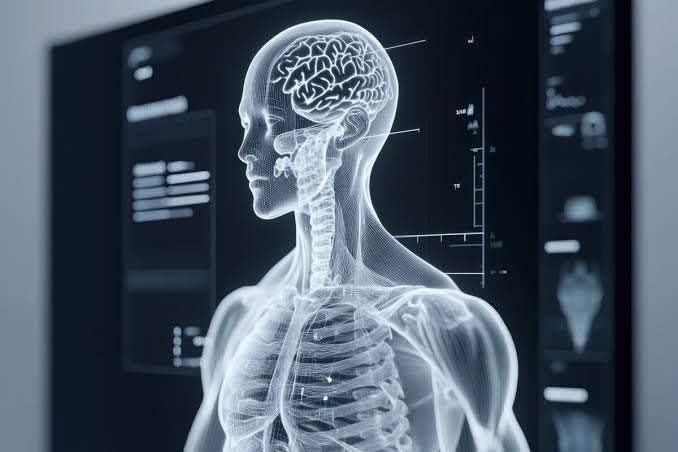

Artificial intelligence enhances scientific imaging by sharpening detail, fusing disparate signals, and enabling precise quantification across datasets. It orchestrates end-to-end workflows from acquisition to reconstruction, denoising while preserving features, and real-time quality decisions. AI-driven segmentation, measurement, and interpretation generate actionable insights with transparency and uncertainty-aware metrics to support reproducibility. Across medicine, materials, and the environment, ethical governance and auditable deployment remain central as methods evolve and new challenges emerge. The path forward invites closer examination.
What AI Does in Scientific Imaging: Core Capabilities
Artificial intelligence enhances scientific imaging by automating and augmenting the analysis of complex visual data. AI identifies patterns, accelerates quantification, and enables real-time decision support. Core capabilities include precision imaging, which sharpens detail and measurement; data fusion, which integrates heterogeneous signals for coherent interpretation; anomaly detection for quality control; and scalable analytics that empower researchers with actionable insights. Freedom-focused, the approach remains rigorous and transparent.
From Acquisition to Reconstruction: AI-Driven Workflows
In modern scientific imaging, AI orchestrates the end-to-end pipeline from data capture to final reconstruction, enabling faster, more reliable results.
AI-driven workflows enable efficient denoising and artifact suppression while preserving critical features, fostering reproducibility and real-time decision-making.
Compliance concerns, including license compliance and model provenance, shape deployment strategies to ensure transparent, auditable imaging pipelines without compromising flexibility or experimentation.
AI in Analysis: Segmentation, Quantification, and Interpretation
AI-powered analysis in scientific imaging encompasses segmentation, quantification, and interpretation, enabling precise delineation of structures, robust measurement of features, and meaningful extraction of actionable insights.
In practice, segmentation strategies must address segmentation biases to avoid skewed boundaries.
Quantification uncertainty arises from data variability and model limitations, necessitating transparent reporting and uncertainty-aware metrics for consistent, freedom-respecting interpretation across diverse datasets and contexts.
Real-World Applications and Case Studies Across Disciplines
Across disciplines, real-world deployments of intelligent imaging systems illustrate how automated analysis translates to tangible gains in accuracy, efficiency, and decision support, from medical diagnostics to materials science and environmental monitoring.
The discourse centers on AI ethics, data governance, imaging biases, reproducibility, cross modality transfer, and real time monitoring, highlighting practical constraints, validation, and responsible integration across diverse workflows.
Frequently Asked Questions
How Does AI Handle Data Privacy in Scientific Imaging Datasets?
AI systems protect scientific imaging data through data encryption and consent provenance, ensuring access controls and auditable provenance. Privacy remains prioritized as models learn from de-identified inputs, enabling compliant collaboration while preserving researchers’ freedom to explore innovative insights.
Can Ai-Generated Images Be Used for Quantitative Validation?
AI generated images can support quantitative validation, provided they align with established Validation metrics. They offer synthetic augmentation, yet must be benchmarked against ground truth to ensure accuracy, generalizability, and reliability for scientific conclusions.
What Thresholds Exist for AI Model Reliability in Imaging?
Threshold challenges loom; reliability benchmarks vary by task and data. The question seeks defined thresholds for AI model reliability in imaging, yet standards are evolving, emphasizing robust calibration, uncertainty quantification, and transparent evaluation across diverse datasets.
How Is Bias Avoided in AI Imaging Across Disciplines?
Bias can be mitigated through bias mitigation strategies and systematic cross discipline benchmarking to ensure models generalize beyond single domains, reducing skew from dataset imbalances, experimental design, and reporting practices across fields.
What Are the Costs and Accessibility Barriers for Labs?
Costs and accessibility barriers for labs include cost barriers, funding gaps, accessibility barriers, and equipment availability, creating a landscape where researchers chase scarce resources; exaggeratedly, a fortress of impediments stands between innovation and every pursuing laboratory, dampening freedom.
Conclusion
In scientific imaging, AI acts as a patient conductor, harmonizing signals into a clear symphony of detail. It threads acquisition, reconstruction, and analysis into a seamless aria, where noise is tamed and subtle features emerge like constellations in a mapped sky. With transparency and uncertainty guiding every beat, researchers navigate the data with auditable trust. The result is not superstition but a precise lighthouse, illuminating unseen corners of science while inviting responsible exploration.