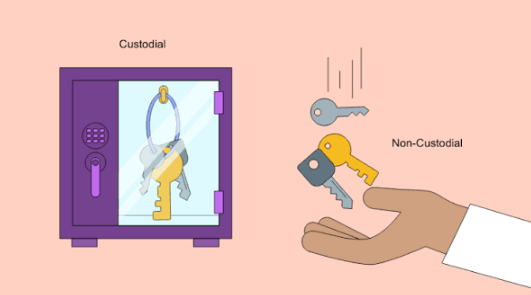

Self-custody centers ownership and control in the user, not a centralized intermediary. It emphasizes private key management, portability, and verifiable asset provenance. Benefits include enhanced privacy, reduced systemic risk, and greater sovereignty over access. Trade-offs involve increased responsibility and potential convenience losses. Practical security involves disciplined key hygiene, hardware wallets, and offline storage. The approach offers auditable, user-managed ledgers, but questions remain about risk tolerance, backup strategies, and long-term succession—issues that warrant careful consideration before adopting self-custody.
How Self-Custody Redefines Ownership and Control
Self-custody shifts the locus of cryptocurrency ownership from a centralized intermediary to the individual user, redefining what it means to hold and control assets.
It reframes rights in terms of access, succession, and verifiable possession within a portable, verifiable ledger.
Privacy economics and custody architecture converge to reduce third-party exposure while preserving transferable provenance and auditability through user-managed keys.
See also: How Artificial Intelligence Is Used in Scientific Imaging
Self-Custody Benefits: Privacy, Risk Reduction, and Sovereignty
The benefits of self-custody in cryptocurrency center on enhanced privacy, reduced systemic risk, and greater user sovereignty.
In practice, private control minimizes counterparty exposure while exposing users to tradeoffs between anonymity and traceability, and between convenience and privacy loss.
Privacy tradeoffs and security implications shape risk profiles, demanding disciplined key management, auditable protocols, and robust, transparent governance for resilient ownership autonomy.
A Practical Step-by-Step Guide to Securing Your Keys and Wallets
A practical approach to securing keys and wallets rests on a structured sequence of actions, from device hygiene to secure backup and ongoing monitoring. The guide emphasizes disciplined key derivation, offline storage, and multi-device separation, minimizing exposure. It acknowledges privacy tradeoffs and key management challenges, recommending regular audits, firmware updates, and compartmentalized recovery planes to preserve autonomy without compromising operational clarity.
Weighing Trade-offs and Choosing Your Self-Custody Path
Deciding between custody models requires a structured assessment of risk, control, and operational overhead.
The path selection hinges on risk awareness, balancing exposure with recoverability and ongoing management.
Legal implications shape compliance and audits, while hardware wallets offer tangible custody, and seed phrases deliver portability.
A pragmatic decision harmonizes security, accessibility, and long-term sovereignty without unnecessary complexity.
Conclusion
Self-custody shifts control from intermediaries to the individual, delivering true ownership and portable provenance. One striking stat: nearly 20% of new crypto holders lose access to funds after mismanaging keys, underscoring the stakes of disciplined key hygiene. Practically, sovereignty hinges on robust storage, hardware wallets, and offline backups. While convenience may diminish, security rises as control becomes explicit, auditable, and transferable. The pragmatic path blends sound hygiene with resilient backup, enabling resilient, self-sovereign asset management.